
Peru plants and animals
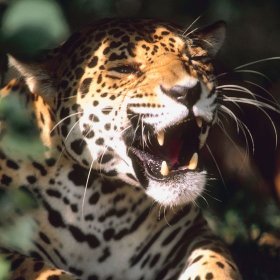 The jaguar is south usa's biggest pet - and a Peruvian native. (Photo: Photos )
Associated Articles
Peru nestles on south usa's northwestern shore. The nation's diverse geography - from seaside flatlands into high mountain peaks of Andes on Amazon and Manu streams rainforests - causes ecosystems inhabited by a diverse array of nature. The United Nations counts Peru among the list of planet's top 20 mega-diverse nations. As of 2008, government-declared normal places make up 13 % of Peru's land.
Medicinal Flowers
Peru's native folks have very long utilized the country's a lot more than 4, 500 indigenous plant species as medication. The coca plant (Erythoxylum coca) is a tiny shrub that develops in mountain and rain forest areas. Native groups chew the leaves to get a stimulant impact similar to that of coffee and brew teas to heal tummy illnesses, exhaustion and height sickness. The leaves also may play a role in a few spiritual ceremonies. Coca extracts may also be used in Western drugs so that as a stimulant in carbonated drinks, plus its most infamous usage, to generate cocaine. Cat's-claw (Uncaria tormentosa) grows into the Peruvian rain woodland. Local communities boil the bark for this woody, yellow-flowering vine to treat sterility, depression, arthritis and cancer tumors. Another rainfall woodland plant, the dragon's bloodstream tree (Croton lechleri), contains a bright-red sap regularly treat pest bites, wounds, ulcers, hemorrhages and disease.
Food Plants
A few frequently grown meals plants tend to be indigenous to Peru. The wolf's peach tomato (Lycopersicon esculentum) is indigenous to the Peruvian Andes and expands often as a short-lived perennial in warmer climates or as an annual in cooler, greater elevations. Wolf's peach tomatoes create little, olive-sized fresh fruits. The potato (Solanum tuberosum), another Peruvian native, has-been eaten in the region for over 8, 000 many years. The potato distribute to European countries after Spanish colonization and today may be the 4th most important meals crop in the world. The manioc or cassava (Manihot esculenta) grows in the Peruvian rainfall forest. This starchy, tuberous food is the most important crop in the Southern United states lowlands, relating to PBS.org. Manioc are boiled or baked and is the foundation of tapioca.
Wild Birds
Peru houses countless local wild birds. Sadly, 79 species tend to be endangered. Among these may be the macaw, a long-tailed parrot popular in dog stores because of its scarlet, green and blue feathers. These parrots partner for a lifetime and populate rainfall forests. The black skimmer flies over the surface of rivers searching for seafood. Black skimmers beaks have longer lower mandibles than top, a silly feature. The hoatzin has a unique plume of red-brown feathers on its head. This chicken-size bird is noted for the inactive lifestyle - it uses a lot of its time sitting however - and for its odoriferous scent. This bird has actually two huge stomachs, enabling it to eat less frequently and eat up fibrous meals that various other birds can't.
Animals
Peru's largest local mammal, jaguars, grow to six legs long and consider to 350 pound. These rain forest dwelling kitties hunt deer, sloth, peccaries and caimans and have now only one all-natural predator, the anaconda. Hunting and encroaching real human development endanger the Peruvian jaguar population. The howler monkey is fabled for its enormous roaring call. These primates howl each day and also at twilight, eat tree vegetation and invest most of their time lounging, sleeping or consuming in the pouring rain woodland canopy. Three kinds of anteaters tend to be native to Peru, the silky, southern and giant. The giant has a two-foot-long tongue so it uses to devour ants straight from the nest.
RELATED VIDEO



Share this Post
Related posts

Shopping in Cusco Peru
Cusco is Peru s recognized center of handicraft production, particularly hand-woven fabrics, and alongside Lima the country…
Read More
Manu National Park, Peru
Manú National Park This huge 1.5 million-ha park features consecutive tiers of plant life increasing from 150 to 4, 200 m…
Read More